Assay Mapping and Molecular Research Intelligence

Scientific research relies on accurate analytical methods to explore biological systems, understand molecular interactions, and investigate the mechanisms behind complex biochemical processes. From the detection of specific biomolecules to the evaluation of cellular activity, laboratory assays provide essential information for studying biological functions and interpreting experimental results.
The development of modern assay technologies has expanded the possibilities of life sciences research. Researchers can now investigate a wide range of biological targets using different detection principles, quantitative methods, and analytical platforms. These approaches contribute to the study of proteins, nucleic acids, enzymes, metabolites, cells, and other components involved in biological processes.
Understanding how these methodologies work, what they measure, and how their results are interpreted is an important part of scientific investigation. Exploring assay technologies alongside molecular research principles provides a broader perspective on the analytical tools used in biochemistry, molecular biology, biotechnology, and biomedical sciences.
Understanding Analytical Assay Technologies
Analytical assays are laboratory methods designed to detect, identify, or quantify specific substances in biological and chemical samples. They are used to investigate molecular composition, monitor biochemical reactions, measure biological activity, and evaluate changes under different experimental conditions.
Each assay relies on a particular detection principle. Some methods measure changes in light absorption, while others detect fluorescence, luminescence, electrical signals, or specific interactions between biological molecules.
Colorimetric assays, for example, determine the concentration of a target compound by measuring changes in absorbance. Fluorescence-based assays use fluorescent signals to detect and quantify molecules, often offering high analytical sensitivity. Luminescence assays measure light generated through chemical or enzymatic reactions and are frequently used in biochemical and cellular investigations.
Immunological assays provide another important approach by using the specific recognition between antibodies and their target antigens. Enzyme-linked immunosorbent assays (ELISA), for instance, are widely applied to detect proteins, antibodies, and other biological substances.
Although these techniques differ in their underlying principles, they share a common objective: generating measurable information that helps researchers investigate biological systems and understand experimental outcomes.


Cell Biology, Viability, and Functional Analysis
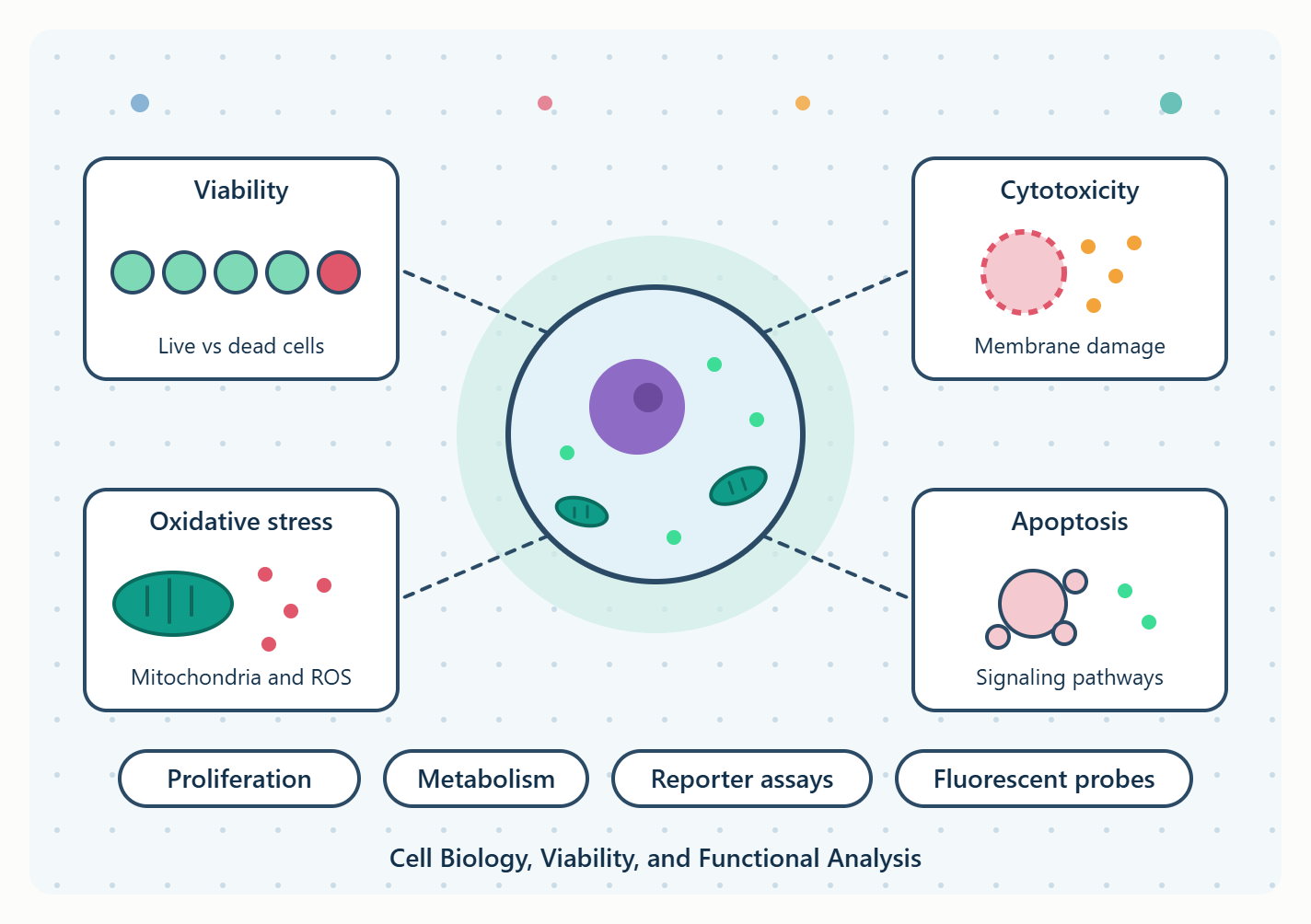
Cell-based assays are widely used to investigate cellular behavior, evaluate biological responses, and understand the effects of different experimental treatments. They provide information about cell viability, proliferation, metabolism, cytotoxicity, and specific cellular functions.
Cell viability assays determine the proportion of living cells within a sample. Some methodologies measure metabolic activity through enzymatic reactions, while others evaluate membrane integrity or detect specific intracellular signals.
Cytotoxicity assays focus on identifying cellular damage. They may measure the release of intracellular enzymes, changes in membrane permeability, or other indicators of cell injury. Learn more
Additional approaches investigate oxidative stress, mitochondrial activity, apoptosis, and intracellular signaling pathways. Fluorescent probes and reporter-based assays are particularly useful for monitoring specific biological events within cells.
By combining different cellular measurements, researchers can obtain a more complete understanding of cell function and the molecular mechanisms associated with experimental responses.
Protein Analysis and Molecular Characterization
Proteins perform essential functions in virtually every biological system. They participate in enzymatic reactions, cellular signaling, structural organization, molecular transport, and the regulation of numerous physiological processes.
Protein analysis includes several techniques designed to determine protein concentration, detect specific targets, evaluate expression levels, and investigate molecular characteristics.
Immunological detection methods, including ELISA and Western blotting (learn more) , are commonly used to study protein abundance and expression. Electrophoresis allows proteins to be separated according to their physical properties, while chromatography supports the separation and purification of complex protein mixtures.
Mass spectrometry provides additional analytical capabilities by identifying and characterizing proteins and peptides through their mass-to-charge ratios.
Other methodologies investigate protein-protein interactions, enzyme functions, and structural properties. Together, these techniques provide complementary information about protein composition, activity, and biological significance.

Biomarker Detection and Quantitative Analysis
Biomarkers are measurable biological characteristics that provide information about specific physiological processes, molecular changes, or biological responses. Their investigation is an important component of biomedical and translational research.
The detection and quantification of biomarkers require analytical methods capable of identifying specific molecular targets within complex biological samples. Depending on the biomarker, researchers may use immunoassays, molecular biology techniques, enzymatic measurements, or advanced analytical instrumentation.
Biomarker analysis can involve different sample types, including serum, plasma, cell lysates, tissue extracts, and other biological materials.
Reliable measurements depend on several analytical characteristics. Sensitivity determines the ability to detect low concentrations of a target, while specificity reflects the capacity of a method to distinguish the intended analyte from other components in the sample. Detection range, precision, reproducibility, and accuracy are also important when evaluating analytical performance.
These parameters help researchers understand the capabilities and limitations of different methodologies and interpret quantitative results appropriately.
Advanced Detection Methods and Analytical Instrumentation
Modern laboratory research uses a wide range of analytical technologies to investigate biological compounds and generate measurable signals. These technologies differ in their detection mechanisms, instrumentation requirements, and applications.
Spectrophotometry is commonly used to measure the absorption of light by a sample at specific wavelengths. It supports concentration measurements, enzyme activity studies, and the monitoring of biochemical reactions.
Fluorescence spectroscopy provides information through the excitation and emission properties of fluorescent molecules. It is widely used in molecular detection, cellular analysis, and biochemical investigations.
Chemiluminescence relies on light produced through chemical reactions and is frequently incorporated into immunological and molecular detection systems.
Chromatographic techniques, including high-performance liquid chromatography (HPLC), separate compounds according to their interactions with different stationary and mobile phases. These methods are useful for analyzing complex mixtures, metabolites, and chemical substances.
Mass spectrometry complements chromatographic analysis by providing information about molecular mass and structural characteristics. These technologies are particularly valuable when detailed molecular identification and characterization are required.
Assay Development, Optimization, and Validation
Developing a reliable analytical assay requires careful consideration of experimental conditions, detection principles, sample characteristics, and measurement objectives.
Assay optimization involves adjusting experimental parameters to obtain consistent and meaningful results. Factors such as reagent concentrations, incubation periods, temperature, sample preparation, and signal detection conditions can influence assay performance.
Controls are equally important because they help distinguish specific analytical signals from background responses and identify potential sources of experimental variability.
Method validation provides a systematic way to evaluate whether an analytical procedure is suitable for its intended purpose. Important performance characteristics include accuracy, precision, sensitivity, specificity, linearity, detection limits, and robustness.
Reproducibility is another essential consideration, particularly when measurements are compared across different experiments, laboratories, or analytical platforms.
A well-characterized assay supports more reliable data generation and helps researchers assess the strengths and limitations of their experimental methodologies.

Applications in Biotechnology and Biomedical Research
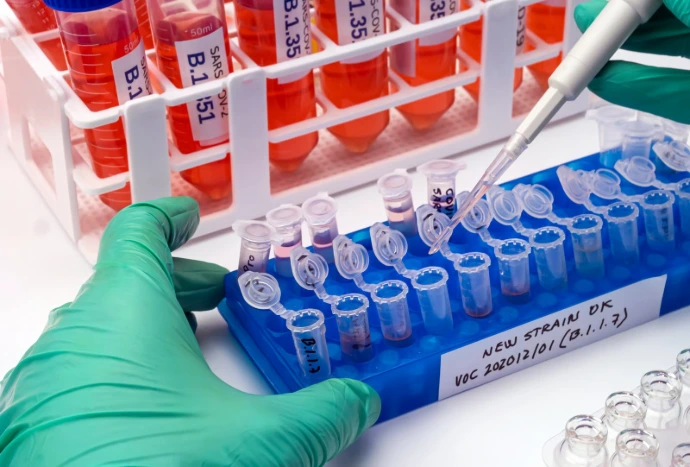
Analytical assay technologies have applications across numerous scientific and industrial fields. Their versatility makes them important tools in fundamental research, biotechnology development, pharmaceutical investigations, and biomedical sciences.
In biotechnology, analytical methods are used to characterize biological materials, monitor production processes, evaluate molecular properties, and investigate biological activity.
In pharmaceutical research, biochemical and molecular assays contribute to the study of biological targets, the evaluation of compound activity, and the investigation of cellular responses to experimental substances.
In microbiology, analytical methodologies help researchers investigate microbial growth, metabolic activity, enzyme production, and interactions between microorganisms and their environments.
Biomedical research also relies on molecular and biochemical measurements to explore cellular mechanisms, protein expression, genetic regulation, and biological pathways.
These applications demonstrate the importance of selecting analytical methods according to the research question, biological target, sample type, and required measurement characteristics.
Emerging Technologies in Molecular and Analytical Research
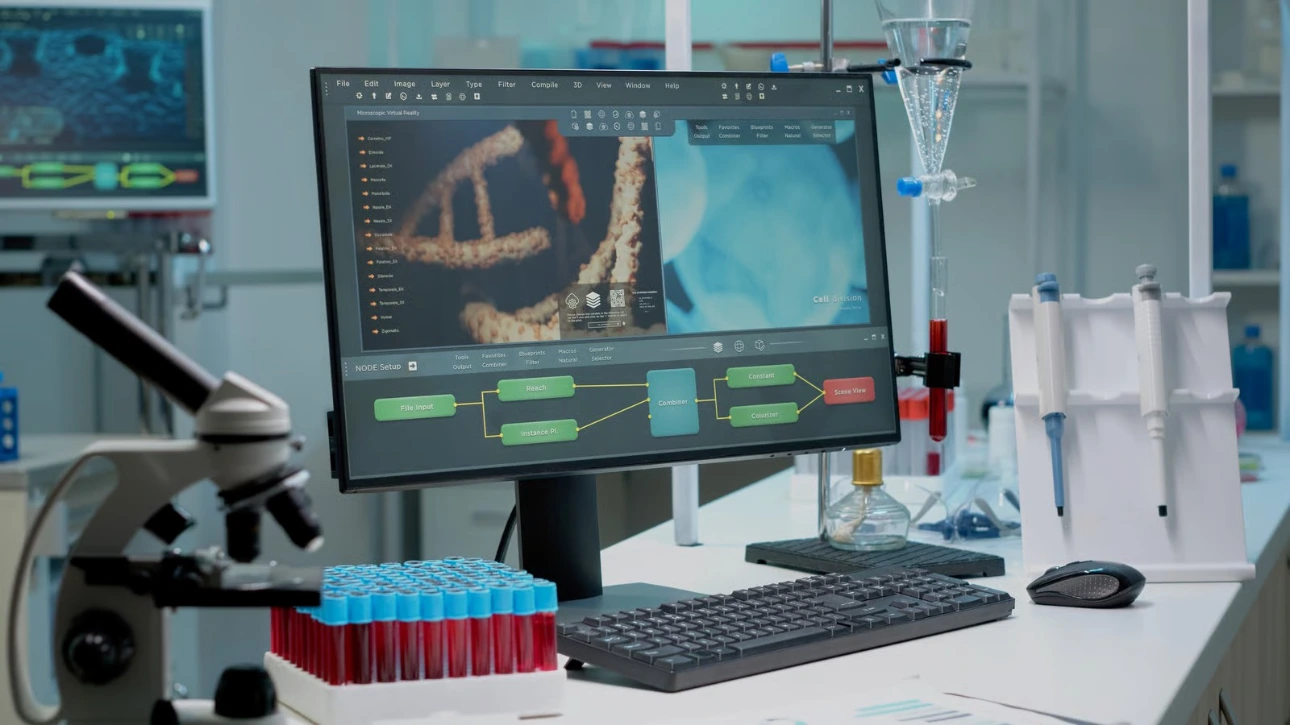
Continuous advances in laboratory instrumentation and analytical methodologies are creating new opportunities for biological investigation. Researchers increasingly use automated systems, high-throughput platforms, multiplex detection, and advanced imaging technologies to examine complex biological samples.
High-throughput screening enables the analysis of numerous samples under standardized experimental conditions. It is particularly useful for investigating multiple compounds, biological targets, or experimental variables within large research projects.
Multiplex assays allow the simultaneous detection of several analytes within a single sample. This approach can provide broader molecular information while reducing the need for separate analytical procedures.
Automation contributes to more standardized laboratory workflows by reducing manual operations and supporting consistent sample processing. Advanced imaging and fluorescence-based systems also offer new possibilities for visualizing cellular structures, monitoring molecular activity, and studying biological interactions.
The integration of these technologies with quantitative data analysis continues to expand the scope of modern molecular research.

Connecting Scientific Methodologies with Molecular Research
Understanding biological systems requires a combination of analytical knowledge, experimental methodologies, and scientific interpretation. Individual assays provide specific measurements, but their results become more informative when considered alongside complementary molecular and biochemical approaches.
For example, investigating cellular metabolism may involve combining metabolite quantification with enzyme activity measurements and cell viability analysis. Similarly, studying gene regulation may require nucleic acid analysis alongside protein detection and functional cellular assays.
This integrated perspective helps researchers connect molecular observations with broader biological processes.
Exploring assay principles, analytical performance, detection mechanisms, and experimental applications provides a valuable foundation for understanding the technologies used throughout modern life sciences.